Dream Retreats for Mental Health Professionals Who Need to Switch Off
- Louise Buckingham

- Mar 11
- 5 min read
We talk a lot about working within mental health spaces, so this week we wanted to take a deep breath and share some of our bucket-list dream retreats to switch off and recharge our batteries.
Mental health professionals spend their working lives holding space for others.
Listening carefully.Holding emotional complexity.Supporting people through some of the most difficult periods of their lives.
While this work is deeply meaningful, it also requires sustained emotional presence and psychological energy. Over time, even the most experienced therapists, counsellors and psychologists can begin to feel the weight of constant responsibility.
Rest, reflection and distance from the consulting room are not luxuries in this profession — they are part of maintaining ethical and sustainable practice.
Over the years, we have quietly compiled a wish list of retreats around the world that feel particularly suited to this kind of restoration. These are places where the pace slows, the environment invites reflection, and mental health professionals can step out of their professional roles and simply be. Here are a few dream retreats that stand out!

A retreat immersed in nature and conservation
Hidden deep within the Cambodian rainforest, Shinta Mani Wild offers an experience that feels completely removed from everyday life.
The retreat sits within a protected wildlife corridor surrounded by jungle, rivers and waterfalls. Guests famously arrive via zipline over the canopy — a dramatic entrance that immediately signals leaving the outside world behind.
What makes this retreat especially powerful is its connection to nature and conservation. Guests can explore the rainforest, swim in natural rivers and learn about local wildlife protection initiatives.
Why it stands out
Complete immersion in nature, which supports nervous system recovery
Minimal digital distraction and deep quiet
A strong sense of purpose through conservation work
For therapists used to consulting rooms and screens, the sensory richness of rainforest life can feel profoundly restorative.

A retreat focused on mind–body balance
Located in the Peloponnese region of Greece, Euphoria Retreat combines ancient Greek philosophy with modern wellbeing science.
The retreat focuses on the relationship between emotional wellbeing and physical health, offering programmes designed to restore balance and reduce stress.
Guests can take part in meditation, breathwork, movement sessions and spa rituals that help calm the nervous system and encourage emotional regulation.
Why it stands out
A strong focus on emotional wellbeing and mental balance
Structured wellness programmes designed for stress recovery
Beautiful surroundings that support reflection and calm
For therapists who spend much of their day supporting others emotionally, retreats that restore both body and mind can offer a powerful reset.

A creative sanctuary for quiet reflection
Les Écolodges de la Baie de Somme is a retreat designed for stillness and creativity.
Set in the French countryside, the retreat offers architecturally designed cabins surrounded by forests, streams and open landscapes.
Rather than offering a busy schedule of activities, the focus is on creating space for rest, reading, writing and walking.
Why it stands out
An atmosphere of deep quiet and creative reflection
Beautiful natural surroundings that encourage slow living
Freedom from structured programmes or rigid schedules
For mental health professionals who spend their days listening and responding to others, the simplicity of this retreat can feel deeply nourishing.

Medical wellness combined with a luxury retreat
Palazzo Fiuggi is one of Europe’s most respected wellness destinations, located in the Italian hills outside Rome.
The retreat combines medical expertise with luxury hospitality, offering personalised programmes designed to support both physical and mental restoration.
Guests can access nutritional consultations, spa therapies, movement sessions and stress recovery programmes.
Why it stands out
Evidence-based wellness programmes guided by specialists
A comprehensive approach to restoring energy and health
A historic setting that encourages relaxation and reflection
For therapists experiencing periods of high workload or burnout, retreats like Palazzo Fiuggi provide structured support for recovery.

Minimalist design and deep tranquillity
Set high in the mountains of Sri Lanka overlooking the Knuckles range, Santani Wellness Resort was designed around the principle that simplicity supports wellbeing.
The architecture blends into the surrounding landscape, encouraging guests to slow down and reconnect with the natural environment.
Yoga, meditation, Ayurvedic treatments and mountain walks form part of the experience.
Why it stands out
Minimalist design that promotes calm and mindfulness
A strong focus on traditional healing and holistic wellbeing
Expansive mountain views that encourage reflection
For therapists who spend their days engaged in emotional and cognitive work, the stillness of this environment offers a powerful contrast.
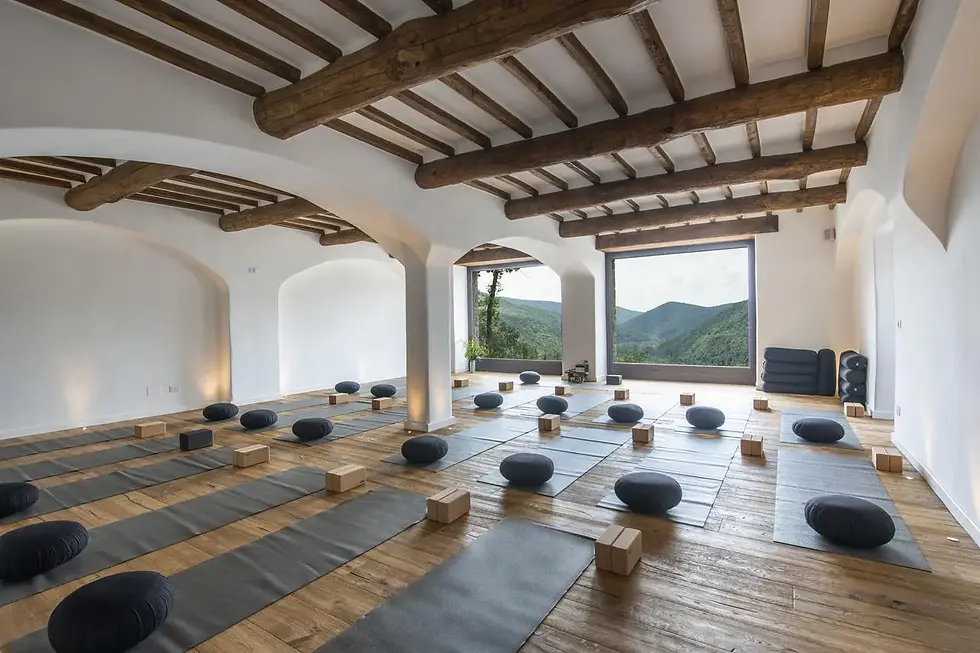
A modern monastic retreat for silence and reflection
Eremito offers something rare: a retreat inspired by monastic simplicity.
Located in the Umbrian countryside, the retreat encourages silence, reflection and a slower pace of life. Rooms are simple stone spaces, meals are communal and vegetarian, and digital distractions are intentionally minimal.
Guests often spend their days walking through surrounding hills, journaling, reading or simply resting.
Why it stands out
An environment built around silence and contemplation
Minimal technology and digital noise
A rhythm that encourages deep reflection and restoration
For mental health professionals accustomed to constant emotional engagement, the quiet simplicity of Eremito can provide a profound reset.
How Therapists Can Choose the Right Retreat for Burnout Recovery
When therapists begin to experience burnout or emotional fatigue, simply taking a holiday is not always enough. Choosing the right retreat can make a significant difference to how restorative the experience feels.
Several factors can help mental health professionals find a retreat that genuinely supports recovery.
Look for environments that encourage nervous system regulation
Retreats located in nature — mountains, forests or near water — often support relaxation more effectively than busy resort environments. Natural surroundings can help slow the body’s stress response and promote calm.
Choose retreats with space for reflection
Some retreats offer structured programmes, while others focus on quiet and personal time. For therapists who spend much of their day listening to others, having space for personal reflection can be especially valuable.
Consider the balance between activity and rest
Movement, yoga or gentle wellness practices can support recovery, but an overly busy schedule can feel counterproductive. The best retreats allow for both guided activities and unstructured downtime.
Limit digital distractions
One of the most restorative elements of many retreats is the distance from constant digital communication. Environments that encourage stepping away from emails, notifications and social media can help mental health professionals truly switch off.
Choose a setting that feels psychologically safe
Perhaps most importantly, the environment should feel calm, comfortable and welcoming. Retreats that prioritise quiet, nature and thoughtful design often provide the conditions needed for genuine rest.
A Final Thought
Mental health professionals often encourage their clients to prioritise rest, reflection and wellbeing.
Retreats offer an opportunity to practise the same principles personally.
Taking time away from the demands of professional life is not indulgent — it is part of sustaining a career built around emotional presence and care.
Sometimes switching off is exactly what allows therapists to return to their work with renewed clarity and energy.



Comments